
How would you explain the word “food” without using it? And how would you show the word “doctor”? Or draw “emotion” so that your classmates recognize it?
At first glance, this is a familiar game of associations. However, the words in the deck are not accidental. They are related to nutrition, movement, personal hygiene, emotions, screen time, and taking care of oneself and others.
This is how the educational card game “For the Next Generation of Healthier Bulgarians” works, created for students from 1. to 4. grade.
How do you explain “health”?
Children hear a lot of health rules: eat well, move, wash their hands, do not spend too much time in front of the screen.
But what happens when, instead of telling them the right answer, we make them look for it themselves?
In the first round of the game, the child must explain the word in his own words, without using the word itself and the forbidden concepts indicated on the card.
This means first thinking about what he really knows about her.
Then comes pantomime. How do you show “movement”? And “care”? How will others know what you mean without saying a word?
In the third round, the task changes again – the word must be drawn.
To arrive at the correct answer, children need to think, seek associations, express themselves, listen to others and work together.
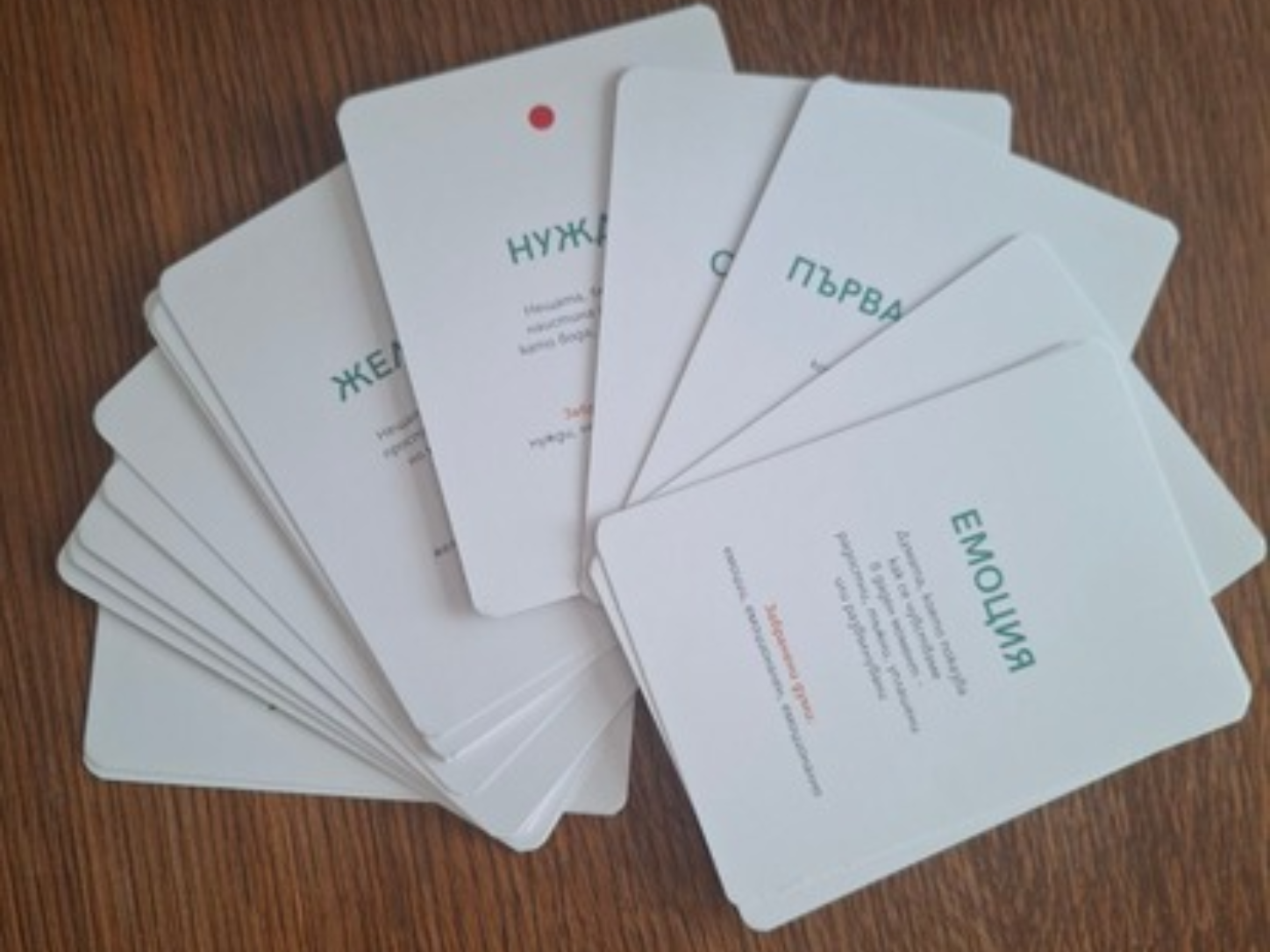
“Our team strongly believes that it is important to teach children what to do and what to be careful about, and not just to hear what is wrong. The game allows them to think, express themselves and use their words and imagination,” says Yana Alexieva from the Parents Association – part of the team that developed the card game.
Health is not just what’s on the plate
The deck contains various cards related to children’s daily lives – from healthy eating and physical activity, through personal hygiene and emotional management, to balancing screen time and taking care of yourself and others.
This expands the conversation about health itself. Because it can start with the food in the school box, but it continues with movement, sleep, the way he deals with his emotions, the time in front of the phone and the attitude towards the people around him. And when these topics appear as part of a game, there is no ready-made lecture that just needs to be listened to. There is a word that needs to be understood.
Why exactly a game?
The card game is part of the upgrade of the methodological guidance of the “PHOENIX for the Next Generation of Healthier Bulgarians” program.
The program supports primary school teachers to teach healthy lifestyle topics in an interesting and accessible way for children. It includes a specially designed training program for teachers, practical materials and tools that help them turn health topics into activities close to students’ daily lives.
The card game is one of the practical tools for classroom work that the program provides to teachers. Through it, they can easily and interactively incorporate more movement, interaction and teamwork, turning students from listeners into active participants in the learning process.
The program also plays an important role for families – parents receive support and practical guidance to continue conversations about healthy habits at home.
So far, two editions of the program have been implemented, in which more than 200 teachers have been supported, reaching over 4000 students from 1. to 4. grade throughout the country. Among them are children from small settlements, where access to quality educational resources is often limited.
The program is implemented by the Workshop for Civic Initiatives Foundation (WCIF) in partnership with the Parents Association and with the support of PHOENIX in Bulgaria.
“The benefit of such an approach is not limited to children knowing which foods are useful or why they should exercise. The goal is for knowledge to acquire practical meaning – to turn it into small decisions that can be made outside the game,” adds Yana Alexieva.
A card will not create a habit. But it can make a start.
No game will make a child suddenly prefer healthy food, put down the phone or start moving more. Habits are not so easy to build. They are accumulated gradually – from the knowledge that the child receives, from the examples around him and from the small choices he makes every day.
But before a choice becomes a habit, the child needs to understand why he is doing it. And this is where a seemingly ordinary game of associations can have its place. The child draws a card, thinks, explains. Others listen. Someone calls out the right word. The team wins a point and the game continues. And the word from the card is no longer just a word that an adult said it was important to know. It is something you have thought about yourself.